Tags
books, Buddhism, christianity, culture, God, Hermann Hesse, history, James Joyce, Joseph Cambell, Life, literature, poetry, religion, shamanic way, Shamanism, Sigma males, spirituality, Zen
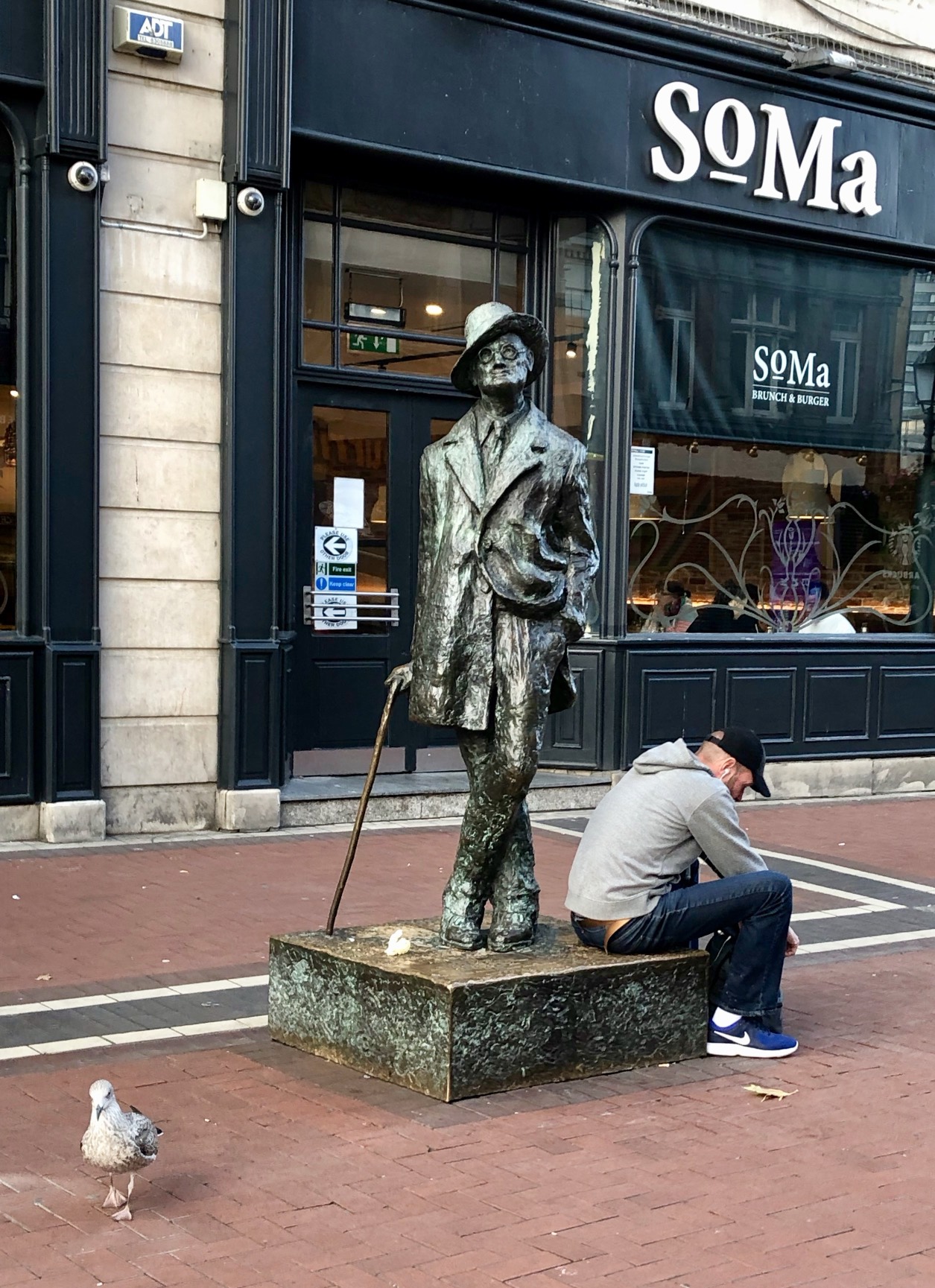
Call us lone wolves. Sometimes Steppenwolves.
Lately I’ve come across a new term: Sigma males.
We’re not alphas, the top dogs, and we’re not betas, the decent hard working follower type.
Sigmas seem to be a breed apart.
At least that’s what YouTube claims.
And I’m mostly in agreement, though when it comes to the assertion we hold some mysterious preternatural attraction for women I beg to differ. That hasn’t been my experience, believe me.
My term for our cohort is ‘Shaman-Type.’ I say ‘type’ because I don’t want the image of a painted feather and leather adorned primitive intruding itself into your mind and prejudicing you against our modern avatars. I once submitted a piece to a Shaman centred UK based magazine but the editor could not get past the idea that a Shaman isn’t a Shaman unless garbed in traditional prehistoric wear and beating a deer skinned drum. That these ‘types’ might still wander the streets of our modern cities, often homeless and psycho-spiritually smashed, didn’t occur to him.
Anyway, the Shaman-Type tradition and mentorship program was stamped out many years ago by the Priests, the latter day custodians of ‘social order.’ Today I’d say the Priests have morphed into the Professors, but the psycho-spiritual stamping continues in the name of a new secular rational version of the ‘social order.’
Anyway, the Omphalos Cafe’s doors are open again to the lone wolves, the Steppenwolves, the Sigmas, and the Shaman-Types!
A quiet haven in a Priest-ridden world.


Men torn or caught between two or perhaps more identities? Steppenwolves of this earth. God knows what a Sigma male is, I wlll have a look on YouTube. As we try to live within this existential cage, can we count ourselves amidst the company of these gentlemen? I do find I tolerate my fellows less and less and less. So happy to have Omphalos back, love and peace Jeff 😉👍👍1. Franz Kafka (1883–1924)
Though his life cut off just short of a century ago, Kafka is the quintessential literary Steppenwolf. By day, he worked tightly bound to the bureaucratic mechanism of an insurance office (the absolute height of bourgeois respectability). By night, he retreated into profound isolation to write nightmarish, surreal stories about human alienation. He was tortured by an inability to live a “normal” life—struggling with intimacy, marriage, and societal expectations—while feeling completely detached from the very world he inhabited. 2. Bobby Fischer (1943–2008)
The American chess grandmaster perfectly fits the “feral intellectual” mold. Fischer possessed a towering, hyper-focused intellect capable of absolute mastery over a highly structured, bourgeois game. Yet, his internal psyche was deeply untamed, distrustful, and hostile toward the modern establishment. After winning the World Championship in 1972, he completely vanished into a reclusive, nomadic existence, rejecting his fame, his country, and standard societal norms, wandering the world as a literal lone wolf. 3. J.D. Salinger (1919–2010)
Salinger achieved the pinnacle of modern commercial and cultural success with The Catcher in the Rye, a novel that itself diagnosed the “phoniness” of bourgeois life. Instead of basking in the literary society of New York, the “wolf” side of Salinger revolted. He retreated behind high walls in Cornish, New Hampshire, spending the last half-century of his life in total, aggressive seclusion. He continued to write extensively but refused to publish, actively shunning the machinery of fame and standard social integration. 4. Glenn Gould (1932–1982)
The legendary Canadian pianist possessed an elite, delicate appreciation for classical art, particularly the structured brilliance of J.S. Bach. However, Gould found the social rituals of the concert hall and the public eye utterly unendurable. At the height of his career in 1964, he permanently abandoned public performances to live as a recluse, interacting with the world primarily via technology, recording studios, and late-night phone calls. He was notoriously eccentric, obsessive-compulsive, and intensely isolated. 5. Christopher McCandless (1968–1992)
Whose life was chronicled in Into the Wild, McCandless represents a more literal, romantic interpretation of the Steppenwolf. He grew up in an affluent, highly successful bourgeois household and graduated from a top university. Repulsed by the material expectations, consumerism, and artificiality of modern society, he severed all ties with his family, gave away his life savings, and adopted the moniker “Alexander Supertramp.” His journey was an explicit attempt to shed his civilized identity entirely and live a wild, untamed existence in the Alaskan bush.
http://www.avg.com/email-signature?utm_medium=email&utm_source=link&utm_campaign=sig-email&utm_content=webmail Virus-free.www.avg.com http://www.avg.com/email-signature?utm_medium=email&utm_source=link&utm_campaign=sig-email&utm_content=webmail <#DAB4FAD8-2DD7-40BB-A1B8-4E2AA1F9FDF2>
Thanks Moodstone, All examples of not fitting in, of dissonance and discord for one reason or another. All speak to society’s disintegration. Here at the Cafe the aim is a new accord, a new relationship with Life and a reintegration of what was once divided or fragmented. Perhaps it must occur on the individual level before it spreads to society. And that is at the heart of the Steppenwolf’s disappearance at the end of the Hesse’s novel. The choice is our’s.