Tags
books, culture, history, Japan, Life, Peter Frankopan, politics, spirituality, The Silk Roads, the United States, Western Civilization, Western Colonialism, World History, writing, WWI and WW2
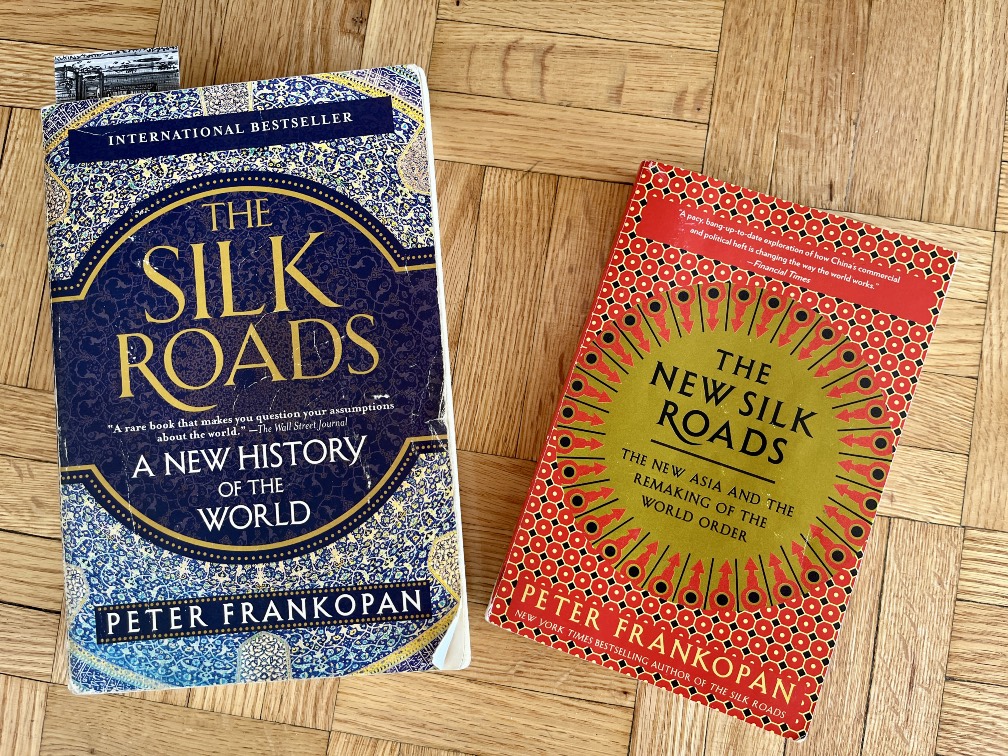
“The decisions being made in today’s world that really matter are not being made in Paris, London, Berlin or Rome—as they were a hundred years ago—but in Beijing and Moscow, in Tehran and Riyadh, in Delhi and Islamabad, in Kabul and in Taliban-controlled Afghanistan, in Ankara, Damascus and Jerusalem. The world’s past has been shaped by what happened along the Silk Roads; so too will its future.”—Peter Frankopan, The New Silk Roads
As I’ve said before, I don’t do politics here at the Omphalos Cafe.
But I am interested in the Flow of history, where we’ve come from and where our beliefs and our belief systems have come from. Our ‘inner world-scapes’ you might say, how we perceive the world and our place in it.
A hundred years ago? Sure, 1926, decisions were being made in Paris, London, Berlin and Rome, but after the insane carnage of the First World War the centre of the political, industrial and financial world was shifting more and more towards Washington and New York. And to the surprise and dismay of a great many Westerners even further west, across the Pacific Ocean to the Far Eastern capital of a small group of islands only recently industrialized off the Eurasian land mass: Tokyo.
Now, America industrializing and rapidly reaching out into the world for access to resources and markets in which to sell its products was only to be expected. It was after all Western through and through.
But Japan was entirely different.
First of all back then in Western eyes—that is white and Christian eyes—all other races on the planet were inferior. Hence planting a standard, whether religious or national, and claiming dominion over land, peoples and available resources was just all part of the ‘white man’s burden.’ And Western men did not hesitate in assuming such an onerous burden, especially when they considered the riches accumulating for themselves and for their country back home.
Japan was one of the first non-white nations to recognize the game being played for what it was and resolved to join the party. In doing so, first as a militarized Western-like Empire and then after catastrophic defeat in the Second World War as an industrial and technological trading colossus, it became an example for all other aspiring non-Western nations across the globe.
So now eighty conflict ridden years after the Second World War wrapped up the world has radically evolved.
Frankopan in his The Silk Roads and The New Silk Roads is right: the decisions today that really matter are being made in cities across the vast Eurasian land mass lying between the Eastern Mediterranean and the Pacific.
But what he failed to mention was that two more cities were joining Paris and London, Berlin and Rome in ever so gradually being partially or wholly left behind by the current of contemporary world affairs:
Washington and New York.
Maybe in the long run that is a good thing…
For in the grand scheme of things…
There is a Oneness and Unity to All….

