Tags
A Portrait of the Artist as a Young Man, books, culture, education, God, James Joyce, Life, Literary criticism, literature, poetry, Shamanism, spirituality, Ulysses, Zen
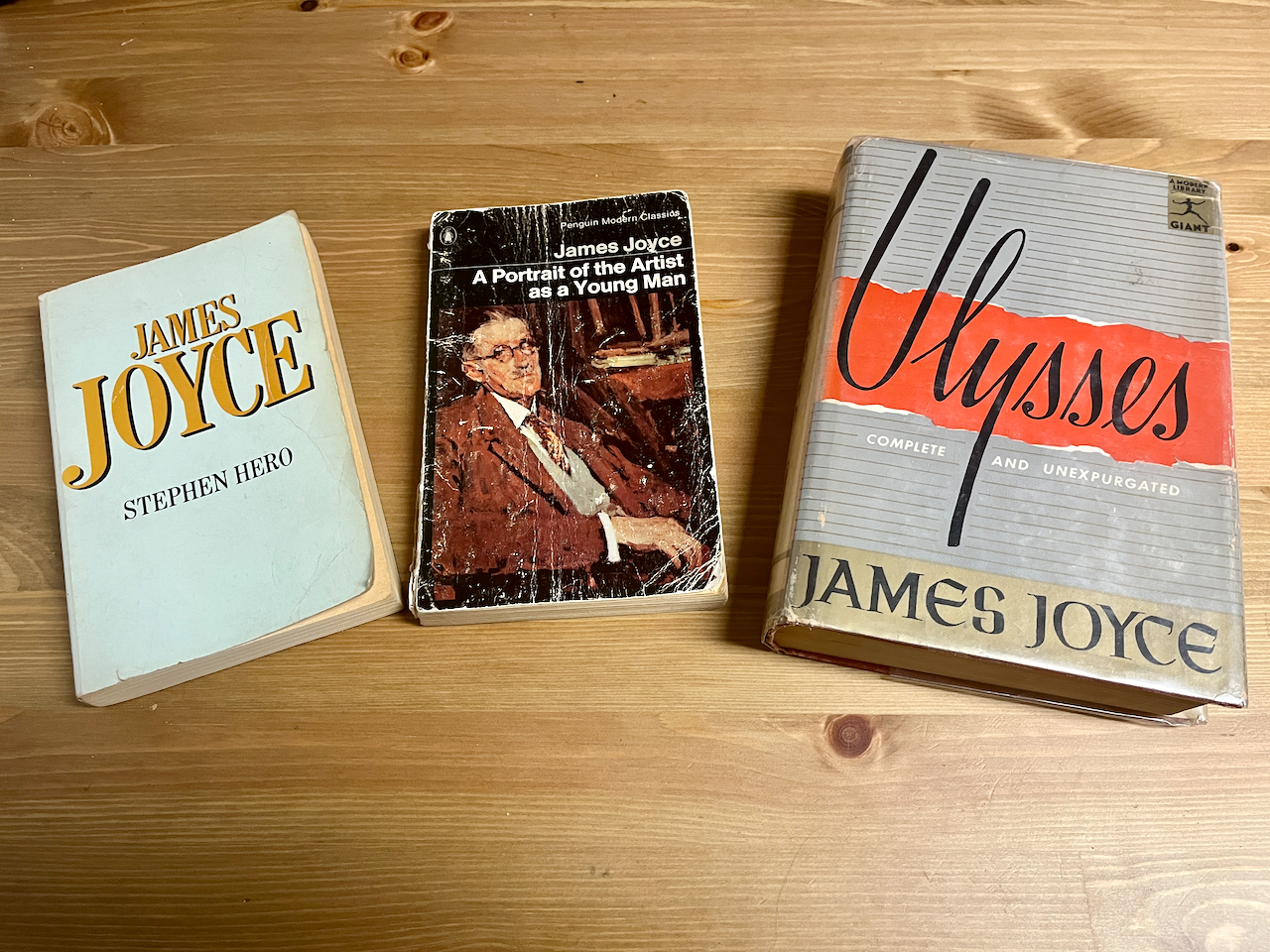
“The poet is the intense centre of the life of his age to which he stands in a relation than which none can be more vital. He alone is capable of absorbing in himself the life that surrounds him and of flinging it abroad again amid planetary music. When the poetic phenomenon is signalled in the heavens… it is time for the critics to verify their calculations in accordance with it.”—James Joyce, Stephen Hero.
I love that last sentence: “When the poetic phenomenon is signalled in the heavens… it is time for the critics to verify their calculations in accordance with it.” That is to say, when the poet has sung his tune it is time for the critics, the teachers and professional expounders to fall in line and adjust their belief systems in accordance with the new song.
Sadly for us all to date, the legion of the aforesaid teachers and expounders have refused to heed the new song and continue to bleat out their old sterile message.
By 1903 James Joyce had finished writing the bulk of the chronicle of his growth, but not quite full awakening, in a manuscript he tentatively titled Stephen Hero. His development to that point, stupendously precocious as it was, remained largely intellectual, and lacked the profound experiential connection to Life which would eventually lift his work to the very pinnacle of artistic vision.
Stephen Hero was rigorously autobiographical, and as such it was utterly unpublishable due to the censorship of the day. Only thirteen years later, in 1916, would an extremely expurgated patchwork quilt of the original manuscript appear with the now familiar title A Portrait of the Artist as a Young Man.
For the critical set, the teachers, professors and expounders, A Portrait and Joyce’s next work, Ulysses, has been a gold mine, affording them a century of material with which to earn their comfortable living.
But they have completely missed the true “heaven signalled” gold contained in those masterworks, which is of course why they’ve failed in the critical task of “verifying their calculations in accordance with it.”
The unsung Truth is Joyce did succeed in making the profound experiential connection with Life, and in fact that personal ordeal is at the very core of Ulysses, though you wouldn’t know it listening to or reading the critics.
Here at the Omphalos Cafe it is that Truth, the song “flung abroad again amid planetary music” that is absolutely vital to us all. Without it our world becomes a Waste Land of drab existence and sterile ideas.
As I sang last post: “Rave On Thy Holy Folk.”
Or as I’ve written and said concerning Joyce’s monumental, and monumentally misunderstood, classic, Ulysses: “Bloomsday is for the masses; Dedalusday for the few.”
 Omphalos Cafe